
 Liam McKay on Unsplash
How To Open Bank Account in Portugal Online (Even Without Proof of Residency)

Byron Mühlberg
Guide
Twenty-first century Portugal is a country that boasts an excellent quality of life, a sunny beach culture, seafood, football legends, charming architecture, and even a vibrant start-up scene. It should come as little surprise to learn, then, that Portugal is among the best-voted destinations for expats on the entire globe¹.
However, with its popularity among expats, many who make the move are left wondering what opening a bank account in Portugal is like. Indeed — whether you're planning to move to Portugal, have just arrived in the country, or are simply looking to open an account there from your home country — opening a bank account is one of the significant challenges that non-residents face when getting started in the country. The good news is that opening a bank account in Portugal is a relatively straightforward process compared to many other countries, with most banks not requiring proof of address in the country in the first place.
In this guide, we zoom out and examine the basics of opening a bank account online in Portugal, as well as what your best options are every step of the way, even without proof of residency.

Monito's Recommendation
Open a Wise Multi-Currency Account, which gives you Belgian bank details (which are eligible in Portugal), among others, as well as a debit card to spend in multiple currencies, including Euros. You can even open an online account before arriving in Portugal, although you'll need to verify your address before receiving your debit card.
What You'll Find in This Guide
- 01. What is banking like in Portugal?
- 02. Opening a bank account with a Portuguese high-street bank
- 03. Opening a bank account with a Portugal digital bank
- 04. Using a bank-like alternative
- 05. Opening a basic account in Portugal
- 06. How to send money to Portugal
- 07. Frequently asked questions about banking in Portugal
Overview of Banking in Portugal
The Portuguese banking system is modern and interconnected. As of November 2021, around 70 banks are operating in the country², most of which are connected through Multibanco, an interbank payments system, ATM network, and point of sales payment system. Portuguese banks are regulated and licensed by the Bank of Portugal (Banco de Portugal), meaning they are also recognised by the European Central Bank (ECB) and approved across the EU.
According to law, it's not mandatory to have a bank account to live in Portugal. However, because the country's economy is digitised (card payments and bank transfers are the norm in Portugal), it could be tricky to operate your normal day-to-day in the country without one.
As a member of the Eurozone, Portugal uses the Euro as its currency, and therefore practically all transactions processed by Portuguese banks are carried out in that currency.
Types of Portuguese Bank Accounts
Opening a bank account in Portugal generally means opening a current account (discussed below) that comes with a debit and credit card or a more comprehensive banking package that includes a current account and other specialised financial services. The following types of accounts are offered universally among Portuguese banks:
- Conta corrente: Known as a current account or checking account in the English-speaking world, this type of bank account is used to process cashless payments geared toward everyday use.
- Conta poupança: A basic savings account in which funds can be deposited and stored. This account time generally comes along with a card to process withdrawals and cashless transactions.
- Conta de depósito a prazo: These "time-deposit accounts" offer a more specialised type of savings account that allows funds to be deposited while restricting withdrawals and (historically) accruing interest.
As with most banks around the globe, Portuguese banks also provide other financial products and services in addition to the account types listed above. These include loans, mortgages, overdrafts, insurance, business banking, trading, and others. Similarly, Portuguese also banks usually offer debit cards (cartãos de débito), credit cards (cartões de crédito), and prepaid cards (cartões pré-pagos) to new clients alongside standard account packages.
These cards typically can be used for free withdrawals from most ATMs across Portugal (most of which belong to the Multibanco network). However, cash withdrawals outside of Portugal usually come with high fees (sometimes as high as 4.00% per transaction). See Monito's guide to saving money while using ATMs abroad to learn more.
What Do You Need To Open a Bank Account in Portugal?
While the paperwork and requirements can differ slightly from bank to bank, the following documents are commonly requested to open a bank account in Portugal:
- A valid identification (e.g. ID card, passport, residence permit, etc.);
- Tax reference (e.g. cartão de contribuinte or "taxpayer card", Numero de Indentificacao Fiscal, etc.);
- A completed account application form;
- Proof of address in Portugal or abroad (e.g. bank statement, utility bill, driving license, etc.);
- Proof of employment or income.

Other than resident and non-resident individuals, Portuguese banks also usually allow entrepreneurs to set up a bank account in their name, provided they possess a residence permit.
 Romazur (CC BY-SA 3.0, modified)
Option 1 — Open an Account With a High-Street Bank
Opening a bank account in Portugal is an easy process all-around regardless of whether you have a residence in the country or not. Unfortunately, however, few traditional Portuguese banks offer banking services fully in English (with the notable exception of Millennium BCP), making it potentially tricky for those who do not speak the local language. On the bright side, many Portuguese banks don't require proof of residence to open an account, giving non-residents a number of different banks to choose from.
All told, maintaining a bank account at a Portuguese bank tends to be comparatively pricey, even though there's been a rapid emergence of digital-first alternatives in recent years. As such, you can generally expect to pay maintenance fees between €3.00 and €10.00 per month to manage a basic current account package and bank card, with other services such as ATM withdrawals, cheques, overdraft, bank transfers, access to banking representatives, and other everyday financial services often racking up additional costs on top of this.
Fortunately for expats from other parts of Europe in particular, most major Portuguese banks charge no or very low transfer fees on bank transfers and bank deposits to and from other EU/EEA countries and currencies. (However — even if they don't make it explicit — you could still be charged an exchange rate margin whenever you transfer to another currency, and that's why we recommend comparing services on Monito to find the cheapest money transfer provider and save money instead.)
As we saw above, , it's not mandatory to have a bank account to live in Portugal. This means that the best option for you could be to continue using your ordinary bank account in your home country, particularly if it offers good cross-border spending options. However, it's a good idea to open a Portuguese bank account if you plan to stay in the country for an extended period of time, e.g. if you find employment there.
Let's take a look at some of the offerings relevant to expats among Portugal's banks:
Novo Banco
One of Portugal's leading banks, Novo Banco was established in 2014 by the Bank of Portugal and is today widely available across the country. While Novo Banco doesn't offer service in English, its account offerings do not require proof of residence to apply. The main accounts relevant to expats in Portugal are the following:
- Conta 100%: Costing €2.95 per month, this online account package comes with a current account, savings account, and debit and credit cards for up to two cardholders. Ideal for day-to-day spending, the Conta 100% requires a minimum initial deposit of €250.
- Conta 18.25: A simple current account geared toward young people aged 18 to 25, this account comes with a debit card and no savings account. It costs €0.00 per month and requires a €50 initial deposit.
- Conta 26.31: Similar to the above, this simple current account comes with a debit card and is geared toward young professionals aged 26 to 31. It also costs €0.00 per month and requires a €50 initial deposit, but unlike the Conta 18.25, it comes with a credit card.
Banco Santander Totta
A familiar bank to many expats from the UK, Santander is a Spanish bank with a global reach, boasting 125 million customers globally and 4.7 million in Portugal alone, making it one of the largest banks in the country (where it operates under the name "Banco Santander Totta"). Below is the main account offering relevant to expats and non-residents:
- Mundo 123: This current account comes with a debit card and credit card and charges low fees on currency exchange transactions. The account costs €7.50 per month, which kicks in at the start of the second year (the first year incurs lower fees).
Caixa Geral de Depósitos
Caixa Geral de Depósitos (CGD) is Portugal's state-owned bank and the second-largest in the country. It offers the following banking packages to expats, although proof of residence in Portugal is required to apply for an account:
- Conta Extracto: This current account package costs €4.95 per month and gives you access to a debit and credit card. It comes with a minimum deposit amount of €150.
- Conta Caixajovem Extracto: Aimed at those up to 25 years of age, this current account comes with a debit card and a minimum deposit amount of €100.
- Conta à Ordem Moeda Estrangeira: This specialized current account package allows you to add up to 17 foreign currencies* onto your account balance, each coming with a monthly fee of €4.95.
Millennium BCP
Often called "Portuguese Commercial Bank" or "ActivoBank", Millennium BCP is Portugal's largest bank with around 4.3 million customers across the country. Its popular flagship banking package is available to non-residents and is available in English:
- Millennium Account: This current account is free of charge (subject to conditions around the client's age the frequency of activity, otherwise €5.20 per month) and has a minimum initial deposit requirement of €250. It comes with two debit and credit cards and a multi-currency functionality in 16 foreign currencies besides the Euro**.
Banco Português de Investimento
Run by Spanish banking giant CaixaBank, Banco Português de Investimento (BPI) is a major retail and business bank headquartered in Porto. Some of its services are available in English, with the following accounts being of particular interest to newcomers in Portugal:
- BPI Value Account: A current account option ranging from €2.99 to €7.99 per month (depending on age- and salary-related conditions) and comes with a debit and credit card.
- Current Account in Foreign Currency: If you're a holder of an existing account in Euros with BPI, you can open a foreign currency account in addition, which will allow you to add balances in as many as 18 foreign currencies***. The account does not come with a dedicated card, and you'll be able to use the card belonging to your primary current account to spend in foreign currencies. The account comes at €16.25 per month.
* Includes USD, GBP, CHF, CAD, AUD, PLN, and 11 others.
** Includes USD, GBP, CHF, CAD, AUD, PLN, and 10 others.
*** Includes USD, GBP, CHF, CAD, AUD, PLN, and 12 others.
Recommendation
High-street Portuguese banks are well-suited for the following types of customers:
- New arrivals who already have proof of residence or plan to get one soon;
- Those looking for fully-fledged financial services (e.g. overdraft, investments, credit card, etc.) and don't mind paying more in fees for them;
- We recommend Millennium BCP for new arrivals who don't speak Portuguese, as most of its everyday services are available in English.
 Scott Graham on Unsplash
Option 2 — Open an Account With a Digital Bank
Digital or online banks are fully-fledged banks offering all or most of the usual banking services. The main difference is that they don't operate out of branches, with all banking services being handled online instead. These banks generally offer a more limited range of services than the traditional banks discussed above, but at a fraction of the price and over a user-friendly web or mobile app interface. You can learn more about these unique players here.
Let's take a look at some of the major digital bank offerings available for opening a bank account in Portugal for residents and non-residents alike:
N26
Arguably Europe's best-known mobile-only bank, N26 is a widely-used and much-loved challenger bank with 7 million customers not only in Portugal but across the Eurozone, the US, and Brazil. Moreover, N26 is also partnered with transfer service Wise, allowing in-app international money transfers at some of the best exchange rates on the market.

N26 requires an EU proof of residence (not necessarily a Portuguese one) to open an account. It offers customers the following three types of accounts in Portugal:
- N26 Standard: An online checking account in the N26 app, which allows mobile payments and includes a see-through debit card for a €10.00 delivery fee. The account costs €0.00 per month.
- N26 Smart: The upgraded checking accounts allow one extra debit card, spending statistics, and phone support. The account costs €4.90 per month.
- N26 Metal: A premium tier account option that includes travel and lifestyle insurances, bespoke rewards, and unlimited free ATM withdrawals. The account costs €16.90 per month.
Bunq
Amsterdam-based bunq is a rapidly expanding European challenger bank that has become a popular alternative to high-street and traditional Portuguese banks in recent years. The bank is well-known for its slick user interface and flexible features geared toward young people, travellers, and others frequently on the move.

Like N26, all of bunq's bank accounts are integrated with Wise, making international money transfers very cheap. The bank offers the following three current account options to customers across the EU:
- Easy Bank: A low-cost current account with a German, French, Spanish, or Dutch IBAN that comes with a debit Mastercard and money transfer capabilities. The account costs €2.99 per month.
- Easy Money: An account with added features and functionalities, including spending statistics, four free ATM withdrawals per month, budgeting features, unique deals, a metal debit card, and bookkeeping software. The account costs €8.99 per month.
- Easy Green: A premium tier, Easy Green's unique feature allows users to track the progress of the reforestation initiative already linked to other tiers (i.e. a tree planted for every €100.00 spent). Costing €17.99 per month, we've found in our bunq review that this initiative is not worth it for most users.
Revolut
Arguably the world's most widely-known name in the challenger bank sphere, Revolut is a licensed bank in Portugal that has stood at the forefront of Europe's low-cost online financial services sector in recent years. With over 12 million users, the London-based fintech is not only available in the UK and the EEA but across the world, including Australia, Canada, Singapore, Switzerland, Japan, and the US.

Here's a full overview of Revolut's different account offerings:
- Standard: With zero up-front costs, the Standard option offers a full EU current account (plus a Lithuanian IBAN) with no monthly fee and a free debit card. ATM withdrawals over €200 (or more than five total withdrawal transactions) per month come at the cost of 2%.
- Plus: Plus accounts cost €2.99 per month, including a debit card. ATM withdrawals are free of charge up to €200 per month, after which a 2% fee applies.
- Premium: Premium accounts cost €7.99 per month, including a debit card, and there are no fees for ATM withdrawals up to €400 per month. After that, it costs 2.00% of the value of the ATM withdrawal.
- Metal: Metal accounts cost €13.99 per month, including a debit card. ATM withdrawals up to €800 per month are free, and after that, it costs 2.00% of the value of the ATM withdrawal.
Recommendation
Due to their flexibility and lower costs, digital-only banks are best for the following customers:
- Those who only require the standard range of banking services (e.g. current account, card, etc.);
- Those who're looking to save money;
- For those without proof of residence in Portugal, we particularly recommend N26, which offers excellent service and doesn't require it for registration.
 Wise
Option 3 — Open a Wise Multi-Currency Account
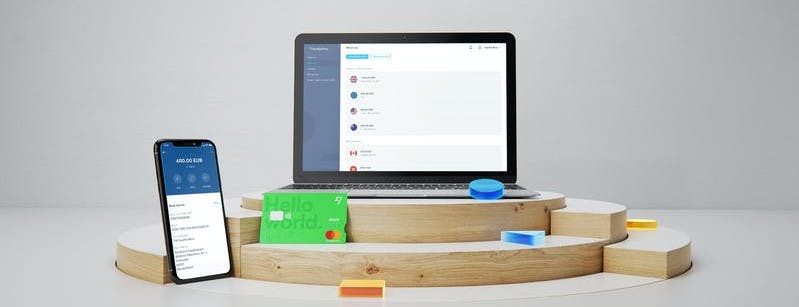
Another option for opening a bank account in Portugal as a non-resident is Wise's Multi-Currency Account. Alongside its accompanying Visa debit card, Wise allows users to pay and be paid like a local in Portugal and across the Eurozone.

Fortunately, after opening your account online, you'll only be required to verify your identity through their interface and you won't need to show proof of residence in Portugal to signup and access to service (although you will need to show proof of residence in the EU/EEA, US, Singapore, Japan, Australia, or New Zealand to sign up). Here's what Wise has to say about opening an account without proof of residence in the UK, although the same applies in Portugal:
"You can then choose to either supply proof of address from a standard list of documents, or to send in a selfie, in which you’re holding your proof of ID. This can be a great alternative if you’re still waiting to move to the UK or haven’t yet got bills and other paperwork registered in your name."
Once you're signed up and your card has arrived (which takes up to two weeks in Europe), you'll be able to take advantage of the following unique features with the Wise Multi-Currency Account:
- Local bank details in the US, Eurozone, UK, Australia, New Zealand, Singapore, Romania, Canada, Hungary, and Turkey;
- Hold, exchange, and top-up up to 56 currencies;
- A multi-currency Visa debit card that's handy for paying in foreign currencies without the hidden fees;
- Access to Wise's powerful international money transfer service right from your account balance.
To get a sense of just how useful Wise can be for expats, let's say that you've just moved from the UK to Portugal and you'd like to spend in Euros before you've got your proof of residence sorted out. With the Wise Multi-Currency Account, you'll be able to:
- Send British pounds from your bank account to your Wise Euro account;
- Convert to Euros at a low fee (e.g. if you add €1,000.00 and pay with British pounds, the total fee will be around 0.35% or £3.00*);
- Pay with your Wise debit card, make or receive SEPA (and SWIFT) payments, and set up direct debits.
You'll also have a dedicated set of Belgian bank details to share with an employer. Belgian IBANs are fully eligible in Portugal and across the Eurozone, and rejecting the payout or receipt of funds based on the origin of an IBAN is illegal. Note that this account does not offer an overdraft, and you won’t earn interest on any in-credit balances.
* Conversion made on 05/11/2021
Recommendation
Speedy and versatile, we recommend Wise's Multi-Currency Account for the following types of users:
- New arrivals in Portugal looking to spend and withdraw cash without a local bank card;
- Those looking to make low-cost money transfers to the Euro from foreign currencies abroad;
- Those looking for a dedicated European IBAN without having to show proof of residence.
 Mauro Sbicego on Unsplash
Option 4 — Open a Basic Account
The final option for opening a bank account in Portugal as a non-resident is to open a basic payment account (known as a conta bancária de base in Portuguese). These bank accounts offer basic banking services for free or at a low cost and are available so long as the applicant is an EU resident³. This means that both EU nationals and holders of EU visas (including those with refugee status) are eligible to open one.
Basic payment accounts are offered by all major Portuguese banks and typically include the following day-to-day financial services:
- Deposit processing: Top-up money into your bank account.
- Withdrawals: Withdraw cash at ATMs.
- Direct debits: Set up recurring payments where funds are automatically dedicated from your bank account.
- Payment card: Use a bank card to make cashless payments and withdraw money.
Examples of basic account products offered at Portuguese banks include the following:
- Santander's Conta de Serviços Mínimos Bancários;
- BPI's Serviços Mínimos Bancários.
Following EU law, basic payment accounts are also insured of up to €100,000.00 in deposits for individual accounts and €200,000.00 in deposits for joint accounts, making them a very secure option. Banks in the EU cannot refuse EU residents from opening an account in another country solely based on not living there.
Learn more about basic bank accounts in Portugal on the Bank of Portugal's official website here (in English).
Recommendation
A very accessible option, we recommend opening a basic payment account in Portugal to the following types of customers:
- Cross-border commuters working in Portugal but living in another EU country;
- Those otherwise living in the EU outside Portugal looking to open a bank account there.
Which Portuguese Bank Is Best for You?
Choosing the best Portuguese bank account will depend entirely on your needs and preferences. If you're a permanent resident in Portugal looking for services such as credit cards and overdrafts, then traditional Portuguese banks will be your best bet. On the other hand, if you're an EU resident looking for a flexible spending and deposit option, then digital banks or a basic account could make more sense. To get a better picture of how the different provider types compare to each other, take a look at the comparison below:
 |  |  |  |  |  | |
| Bank | ||||||
| Provider Type | Bank | Bank | Neobank | Neobank | Neobank | Neobank |
| Account Type | Current account | Current account | Current account | Current account | Current account | Multi-currency account |
| Card Type | Visa credit + debit | Visa credit + Visa/Mastercard/UnionPay debit | Mastercard debit | Mastercard/Maestro credit | Mastercard debit | Visa debit |
| Language(s) | Portuguese | Portuguese, English | English, Portuguese and 3 others | English, Portuguese and 5 others | English, Portuguese and 19 others | English, Portuguese and 14 others |
| Currencies | EUR | EUR | EUR | EUR | EUR and 30+ others | EUR and 50+ others |
| Monthly Fee | €0.00 - €2.95 | 0 | 0 | 2.99 | 0 | 0 |
| Proof of Portuguese Residence Requirement | ✘ | ✘ | ✘ | ✘ | ✘ | ✘ |
| Ideal For | Portuguese-speakers looking for a fully-fledged bank account with multiple services. | English-speakers looking for a fully-fledged bank account with multiple services. | EU residents looking for a low-cost fully-fledged bank account. | Non-residents in Portugal looking for a basic but flexible and eco-friendly current account and card offering. | Residents and non-residents in Portugal looking for access to basic banking services at a very low cost. | New arrivals in Portugal looking to spend and withdraw cash before acquiring a local bank account. |
| See More | See More | Try N26 | Try bunq | Try Revolut | Try Wise |
Last updated: 05/11/2021
Other Banking Guides for Non-Residents


Why You Can Trust Us
You’re probably all too familiar with the often outrageous cost of sending money abroad. After facing this frustration themselves back in 2013, Monito co-founders François, Laurent, and Pascal launched a real-time comparison engine to compare the best money transfer services worldwide.
Today, Monito’s award-winning comparisons, reviews, and guides (no longer just about money transfers but also digital accounts, travel cards, eSIMs, and travel insurance) are trusted by millions each year. Our recommendations are backed by our comparison data and dozens of expert tests, allowing you to confidently make the savviest decisions.

15+ million people across the globe trust Monito.

Monito's experts spend hours researching and testing services

Commissions we may receive never impact our independence.