
 Sorasak on Unsplash
How To Open a Bank Account in Austria Online (Even Without Proof of Residency)

Byron Mühlberg
Guide
Jarrod Suda
Reviewer

The small landlocked south-central European nation of Austria — known for its pristine Alps, eighteenth-century Viennese opulence, and delectable apfelstrudel — isn't only a draw for around 32 million foreign visitors each year, but for a significant number of expats too.
However, moving to Austria can be a challenge, with opening a bank account in the country high on the agenda for many new arrivals. In this guide, we explore how to open a bank account in Austria for expats and newcomers — with or without proof of residence. Check out 4 solid choices for opening an Austrian bank account online too.

Among the cheapest banking options available to EU residents, Revolut stands out for its fee-free everyday use. We recommend the fintech app for an account in Austria if you're an EU resident looking for a smart, digital-only alternative to traditional banks.
What You'll Find in This Guide
- 01. What is banking like in Austria?
- 02. Opening a bank account with an Austrian high-street bank
- 03. Opening a bank account with a Austrian digital bank
- 04. Using a bank-like alternative
- 05. Opening a basic account in Austria
- 06. How to send money to Austria
- 07. Frequently asked questions about banking in Austria
Overview of Banking in Austria
Austria has a large and well-established banking industry with a history that spans centuries. As of 2021, around 100 banks operate in Austria (over 700 if you count all the local Raiffeisen Credit Cooperative banks). The banking system is relatively diverse, with traditional banking corporations, international banks, savings banks, cooperative banks (i.e. Volksbanken and Raiffeisenlandesbanken), and digital banks all present in the country.
Some of the largest banks in Austria include Erste Bank, Raiffeisen Bank International, and UniCredit Bank Austria — all of which are authorized and regulated by the Oesterreichische Nationalbank (OeNB), Austria's central bank.
Types of Austrian Bank Accounts
Generally, there are just two types of bank accounts relevant for day-to-day use in Austria. They are as follows:
- Girokonto: Synonymous with standard checking accounts found in most English-speaking countries, these accounts are used to process cashless payments and are geared toward everyday use.
- Sparkonto: A savings account that allows funds to be deposited while restricting withdrawals and (historically) accruing interest.
Like in most countries, opening a bank account or a banking package (e.g. a current and savings account combined with other services) will always come with a debit card and, in many cases, a credit card too. Typical debit cards, known as a Debitkarten, can be used in Austria for cashless payments and ATM withdrawals. Credit cards (or Kreditkarten in German), on the other hand, can be used for online payments and come with a monthly credit limit as well as rewards and exclusive bonuses.
Debit cards typically can be used for free withdrawals from most ATMs across Austria, although cash withdrawals outside of the country usually come with high fees (sometimes as high as 4.00% per transaction). See Monito's guide to saving money while using ATMs abroad to learn more.
What Do You Need To Open a Bank Account in Austria?
While the paperwork and requirements can differ slightly from bank to bank and even branch to branch, the following documents are commonly required to open a bank account in Austria:
- A valid identification (e.g. ID card, passport, residence permit, etc.);
- A Meldezettel (proof of address in Austria);
- Employment contract (Arbeitsvertrag) or proof of student status.

Additionally, it's possible that Austrian banks will ask you to provide your three latest payslips in order to proove that you don't have outstanding debit in the country, a process known as Gehaltsnachweis.
Option 1 — Open an Account With a High-Street Bank
 Andy Mabbett (CC BY-SA 3.0, modified)
It's generally very easy to open a bank account in Austria, even as a non-resident. So long as you have employment or a formal reason for living in the country, most banks won't turn away your business. In Austria, it's still very common to open a bank account by appointment, although online applications are becoming increasingly the norm.
Unlike most countries, account maintenance fees are generally charged on a quarterly basis in Austria and often sit between €15 and €30 per quarter (which comes to around €5 to €10 per month), depending on the bank or the account chosen. Austrian banks also charge for other financial services such as ATM withdrawals, cheques, overdraft, and international transfers. (In the latter case you'll always be charged an exchange rate margin whenever you transfer to another currency, and that's why we recommend comparing services on Monito to find the cheapest money transfer provider and save money instead.)
Let's take a look at some of the offerings relevant to expats among Austria's banks:
Erste Bank
Austria's largest bank, Erste Group Bank is a large Vienna-based multinational bank with 15.7 million customers not only in Austria but across Europe. Its accounts are available even for non-residents in Austria, with expats generally needing only to show a valid photo ID and go through an online verification process. Two of Erste Bank's most basic current accounts for everyday purposes are:
- s Plus Konto (Girokonto): An account package structured in such a way that you pay less in monthly fees the more additional services (e.g. credit card, financing, insurance, investments, etc.) you add on. The account costs between around €2.00 and €5.50 per month depending on which additional services you choose as well as your financial behaviour (e.g. making contactless payments, withdrawing at Erste Bank or Sparkassen ATMs, etc.)
- s Kompakt Konto (Online-Girokonto): This account is a more basic version of the above which costs a fixed quarterly fee of €9.00 (i.e. €3.00 per month) and includes a debit card and internet banking. Like the s Plus Konto, this account also comes integrated with the live online banking service 'George'.
Raiffeisen Bank Austria
Raiffeisen Bank International (RBI) is a major Austrian bank with a long history of co-operative and mutual banking in rural regions. Its basic current account does not require Austrian proof of residence:
- Girokonto: A standard checking account that comes with a debit card and online and mobile banking Account maintenance fees differ from branch to branch (each Raiffeisen branch is practically autonomous) but the fees tend to be between €15.00 and €20.00 per year.
UniCredit Bank Austria
Also known Bank Austria, UniCredit Bank Austria is a an Austrian bank owned by the larger Italian UniCreditr Group. It offers service in English and, like the banks above, is available to non-residents in Austria. It's three current accounts are as follows:
- GoGreen Account: Aside from the online current account and debit card, this account comes with various cashback perks and a promise from Bank Austria to donate an equivalent the of the deposit amount in your account to sustainable causes. It costs nothing for the first year and €3.00 thereafter.
- Online Account: A standard current account with a debit card and internet and mobile banking, what stands out about this account is that it all fees for online payments (except for international payments). It costs around €2.00 per month (billed quarterly).
- Relax Account: This account waives practically all fees (except for international payments) but costs around €25.00 per quarter.
High-street Austrian banks are well-suited for the following types of customers:
- New arrivals who already have proof of residence or plan to get one soon;
- Those looking for fully-fledged financial services (e.g. overdraft, investments, credit card, etc.) and don't mind paying more in fees for them;
- We recommend UniCredit Bank Austria for new arrivals who don't speak German, as most of its everyday services are available in English.
Option 2 — Opening a Digital Bank Account in Austria for Non-Residents
 Scott Graham on Unsplash
Digital or online banks are fully-fledged banks offering all or most of the usual banking services. The main difference is that they don't operate out of branches, with all banking services being handled online instead. These banks generally offer a more limited range of services than the traditional banks discussed above, but at a fraction of the price and over a user-friendly web or mobile app interface. You can learn more about these unique players here.
Let's take a look at some of the major digital bank offerings available for opening the best online bank accounts in Austria for residents and non-residents alike:
N26
Arguably Europe's best-known mobile-only bank, N26 is a widely-used and much-loved challenger bank with 7 million customers not only in Austria but across the Eurozone, the US, and Brazil. Moreover, N26 is also partnered with transfer service Wise, allowing in-app international money transfers at some of the best exchange rates on the market.
N26 requires an EU proof of residence (not necessarily an Austrian one) to open an account. It offers customers the following three types of accounts in Austria:
- N26 Standard: An online checking account in the N26 app, which allows mobile payments and includes a see-through debit card for a €10.00 delivery fee. The account costs €0.00 per month.
- N26 Smart: The upgraded checking accounts allow one extra debit card, spending statistics, and phone support. The account costs €4.90 per month.
- N26 Metal: A premium tier account option that includes travel and lifestyle insurances, bespoke rewards, and unlimited free ATM withdrawals. The account costs €16.90 per month.
Bunq
Amsterdam-based bunq is a rapidly expanding European challenger bank that has become a popular alternative to high-street and traditional Austrian banks in recent years. The bank is well-known for its slick user interface and flexible features geared toward young people, travellers, and others frequently on the move.
Like N26, all of bunq's bank accounts are integrated with Wise, making international money transfers very cheap. The bank offers the following three current account options to customers across the EU:
- Easy Bank: A low-cost current account with a German, French, Spanish, or Dutch IBAN that comes with a debit Mastercard and money transfer capabilities. The account costs €2.99 per month.
- Easy Money: An account with added features and functionalities, including spending statistics, four free ATM withdrawals per month, budgeting features, unique deals, a metal debit card, and bookkeeping software. The account costs €8.99 per month.
- Easy Green: A premium tier, Easy Green's unique feature allows users to track the progress of the reforestation initiative already linked to other tiers (i.e. a tree planted for every €100.00 spent). Costing €17.99 per month, we've found in our bunq review that this initiative is not worth it for most users.
Revolut
Arguably the world's most widely-known name in the fintech sphere, Revolut has stood at the forefront of Europe's low-cost online financial services sector in recent years. With over 12 million users, the London-based fintech is not only available in the UK and the EEA but across the world, including Australia, Canada, Singapore, Switzerland, Japan, and the US.

Here's a full overview of Revolut's different account offerings:
- Standard: With zero up-front costs, the Standard option offers a full EU current account (plus a Lithuanian IBAN) with no monthly fee and a free debit card. ATM withdrawals over €200 (or more than five total withdrawal transactions) per month come at the cost of 2%.
- Plus: Plus accounts cost €2.99 per month, including a debit card. ATM withdrawals are free of charge up to €200 per month, after which a 2% fee applies.
- Premium: Premium accounts cost €7.99 per month, including a debit card, and there are no fees for ATM withdrawals up to €400 per month. After that, it costs 2.00% of the value of the ATM withdrawal.
- Metal: Metal accounts cost €13.99 per month, including a debit card. ATM withdrawals up to €800 per month are free, and after that, it costs 2.00% of the value of the ATM withdrawal.
Due to their flexibility and lower costs, digital-only banks are best for the following customers:
- Those who only require the standard range of banking services (e.g. current account, card, etc.);
- Those who're looking to save money;
- For those without proof of residence in Austria, we particularly recommend N26, which offers excellent service and doesn't require it for registration.
Option 3 — Open a Wise Multi-Currency Account
 Wise
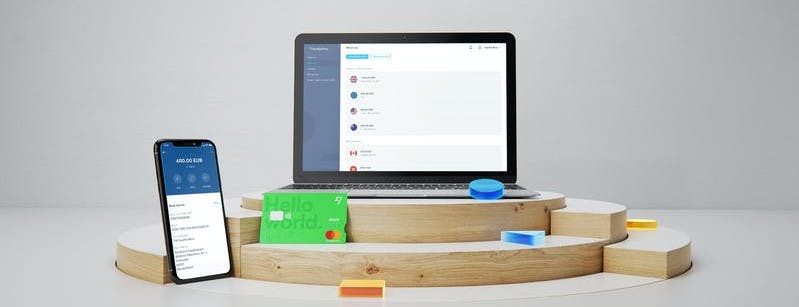
Another option for opening a bank account in Austria as a non-resident is Wise's Multi-Currency Account. Alongside its accompanying Visa debit card, Wise allows users to pay and be paid like a local in Austria and across the Eurozone.

Austria Wise Account for Non-Residents
Fortunately, after opening your account online, you'll only be required to verify your identity through their interface and you won't need to show proof of residence in Austria to signup and access to service (although you will need to show proof of residence in the EU/EEA, US, Singapore, Japan, Australia, or New Zealand to sign up). Here's what Wise has to say about opening an account without proof of residence in the UK, although the same applies in Austria:
"You can then choose to either supply proof of address from a standard list of documents, or to send in a selfie, in which you’re holding your proof of ID. This can be a great alternative if you’re still waiting to move to the UK or haven’t yet got bills and other paperwork registered in your name."
Wise Multi-Currency Account Features in Austria
Once you're signed up and your card has arrived (which takes up to two weeks in Europe), you'll be able to take advantage of the following unique features with the Wise Multi-Currency Account:
- Local bank details in the US, Eurozone, UK, Australia, New Zealand, Singapore, Romania, Canada, Hungary, and Turkey;
- Hold, exchange, and top-up up to 56 currencies;
- A multi-currency Visa debit card that's handy for paying in foreign currencies without the hidden fees;
- Access to Wise's powerful international money transfer service right from your account balance.
To get a sense of just how useful Wise can be for expats, let's say that you've just moved from the UK to Austria and you'd like to spend in Euros before you've got your proof of residence sorted out. With the Wise Multi-Currency Account, you'll be able to:
- Send British pounds from your bank account to your Wise Euro account;
- Convert to Euros at a low fee (e.g. if you add €1,000.00 and pay with British pounds, the total fee will be around 0.35% or £3.00*);
- Pay with your Wise debit card, make or receive SEPA (and SWIFT) payments, and set up direct debits.
You'll also have a dedicated set of Belgian bank details to share with an employer. Belgian IBANs are fully eligible in Austria and across the Eurozone, and rejecting the payout or receipt of funds based on the origin of an IBAN is illegal. Note that this account does not offer an overdraft, and you won’t earn interest on any in-credit balances.
* Conversion made on 05/11/2021
Speedy and versatile, we recommend Wise's Multi-Currency Account for the following types of users:
- New arrivals in Austria looking to spend and withdraw cash without a local bank card;
- Those looking to make low-cost money transfers to the Euro from foreign currencies abroad;
- Those looking for a dedicated European IBAN without having to show proof of residence.
Option 4 — Open a Free Basic Account in Austria
 Mauro Sbicego on Unsplash
The final option for opening a bank account in Austria as a non-resident is to open a basic payment account (known as a Basiskonto in German). These bank accounts offer basic banking services for free or at a low cost and are available so long as the applicant is an EU resident. This means that both EU nationals and holders of EU visas (including those with refugee status) are eligible to open one.
Basic payment accounts are offered by all major Austrian banks and typically include the following day-to-day financial services:
- Deposit processing: Top-up money into your bank account.
- Withdrawals: Withdraw cash at ATMs.
- Direct debits: Set up recurring payments where funds are automatically dedicated from your bank account.
- Payment card: Use a bank card to make cashless payments and withdraw money.
Examples of basic account products offered at Austrian banks in Vienna and other places include the following:
- UniCredit Bank Austria's Basiskonto;
- Raiffeisen's Basiskonto.
Following EU law, basic payment accounts are also insured of up to €100,000.00 in deposits for individual accounts and €200,000.00 in deposits for joint accounts, making them a very secure option. Banks in the EU cannot refuse EU residents from opening an account in another country solely based on not living there.
A very accessible option, we recommend opening a basic payment account in Austria to the following types of customers:
- Cross-border commuters working in Austria but living in another EU country;
- Those otherwise living in the EU outside Austria looking to open a bank account there.
Which Austrian Bank Is Best for You?
Choosing the best Austrian bank account will depend entirely on your needs and preferences. If you're a permanent resident in Austria looking for services such as credit cards and overdrafts, then traditional Austria banks will be your best bet. On the other hand, if you're an EU resident looking for a flexible spending and deposit option, then digital banks or a basic account could make more sense. To get a better picture of how the different provider types compare to each other, take a look at the comparison below:
 |  |  |  |  | |
| Bank | |||||
| Provider Type | Bank | Bank | Bank | Neobank | Neobank |
| Account Type | Current account | Basic account | Current account | Current account¹ | Multi-currency account |
| Card Type | Mastercard debit | Mastercard debit | Mastercard debit | Mastercard debit | Visa/Mastercard debit |
| Language(s) | English, German | German | English, German and 3 others | English, German | English, German and 14 others |
| Currencies | EUR | EUR | EUR | EUR | EUR and 50+ others |
| Monthly Fee | 2.13 | 0 | 0 | 0 | 0 |
| Proof of Austrian Residence Requirement | ✘ | ✘ | ✘ | ✘ | ✘ |
| Ideal For | German-speakers looking for a fully-fledged bank account with multiple services. | EU residents living outside Austria looking to open a bank account in the country. | EU residents looking for a low-cost fully-fledged bank account. | Expats and locals in Austria looking for a flexible current account and card with access to crypto and investments. | New arrivals in Austria looking to spend and withdraw cash before acquiring a local bank account. |
| Try Erste Bank | Try Raiffeisen | Try N26 | Try Nuri | Try Wise |
Last updated: 10/12/2021
¹ Held via Solarisbank AG in Germany
Other Online Banking Guides for Non-Residents and Foreigners


Why You Can Trust Us
You’re probably all too familiar with the often outrageous cost of sending money abroad. After facing this frustration themselves back in 2013, Monito co-founders François, Laurent, and Pascal launched a real-time comparison engine to compare the best money transfer services worldwide.
Today, Monito’s award-winning comparisons, reviews, and guides (no longer just about money transfers but also digital accounts, travel cards, eSIMs, and travel insurance) are trusted by millions each year. Our recommendations are backed by our comparison data and dozens of expert tests, allowing you to confidently make the savviest decisions.

15+ million people across the globe trust Monito.

Monito's experts spend hours researching and testing services

Commissions we may receive never impact our independence.